
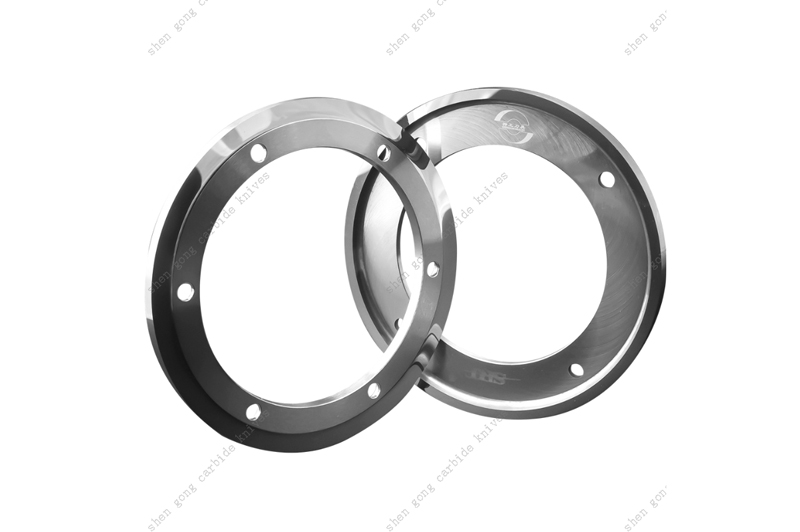
In the rapidly evolving industrial manufacturing sector, precision and durability of cutting tools are paramount. With increasing demands for high-performance blades used across diverse industries—from automotive to aerospace, electronics to packaging—manufacturers are continually pushing the boundaries of material science and production technology. Shen Gong, a distinguished leader in the field, epitomizes this innovation with its complete production lines for tungsten carbide (WC)-based cemented carbide and titanium carbonitride (TiCN)-based cermet materials, catering to a broad spectrum of industrial knives and blades.
### Comprehensive Production Line Ensuring Superior Quality
One of the standout features of Shen Gong’s operations is its integration of the entire manufacturing process, spanning from the initial creation of raw powder materials via a rapid thermal process (RTP) to the precision crafting of finished products. This full-spectrum control over manufacturing parameters allows the company to maintain a high standard of product consistency, mechanical strength, and wear resistance—key attributes in industrial blades.
The company’s investment in RTP technology for powder making is particularly notable. Rapid thermal processing enables fine tuning of powder particle characteristics, such as size, shape, and distribution, which directly influence the sintering process and hence the quality of the final product. By mastering this step, Shen Gong ensures that the raw materials used in forming carbide and cermet composites exhibit uniformity and optimal bonding properties.
### Advanced Materials: WC-based Cemented Carbide and TiCN-based Cermet
Shen Gong’s expertise covers two of the most critical materials used in blade manufacturing—WC-based cemented carbides and TiCN-based cermets. Both materials are prized for their exceptional hardness and ability to retain cutting edges under demanding operational conditions, yet each brings unique advantages.
**WC-based Cemented Carbide:** Tungsten carbide composite materials, bonded typically with cobalt or nickel, are widely recognized for their excellent wear resistance and toughness. These properties make WC-based cemented carbides the material of choice for cutting tools that face high mechanical stresses and abrasive environments. By refining the composition and microstructure through their production process, Shen Gong delivers blades that combine sharpness and longevity, minimizing downtime and replacement costs for industrial users.
**TiCN-based Cermet:** Titanium carbonitride-based cermets represent a newer generation of cutting materials integrating ceramic and metallic properties. TiCN cermets offer superior heat resistance and corrosion resistance compared to traditional cemented carbides, making them ideal for high-speed machining and precision cutting applications. The material's fine grain structure contributes to higher hardness and better wear resistance, critical for maintaining edge integrity during high-temperature cutting operations.
### Applications Across Industries
The versatility of Shen Gong’s products is reflected in their application across various sectors. From food processing and textile manufacturing to metal fabrication and semiconductor industries, industrial knives and blades made from WC-based cemented carbide and TiCN-based cermet materials form the backbone of efficient production lines worldwide.
The automotive industry, for instance, relies heavily on precision cutting tools to manufacture components with tight tolerances. Shen Gong’s blades contribute to improving productivity by enabling faster machining speeds and longer tool life, ultimately reducing production costs. Similarly, in electronics manufacturing, where component sizes continue to shrink, the demand for ultra-precise and durable blades is expanding. Materials like TiCN-based cermet provide the necessary performance in such precision-centric environments.
### Commitment to Innovation and Sustainability
Beyond product excellence, Shen Gong demonstrates a commitment to innovation and sustainability. The company continuously explores advancements in material science to develop cutting tools with enhanced environmental profiles, such as energy-efficient manufacturing techniques and materials engineered to extend tool life, thereby reducing waste.
Moreover, integration of smart manufacturing technologies enables Shen Gong to monitor production quality in real-time, optimizing resource use and minimizing defects. This approach not only improves operational efficiency but also aligns with global trends toward greener industrial practices.
### Looking Ahead
As industries face ever-increasing demands for efficiency, precision, and sustainability, the role of high-performance cutting tools becomes more critical. Shen Gong’s comprehensive production capabilities, combining in-depth material expertise with advanced manufacturing technology, position the company as a pivotal contributor to the industrial blades sector.
The company is poised to expand its research into novel composite materials and innovative processing methods, aiming to unlock new performance levels for industrial cutting tools. Through collaboration with global partners and continuous investment in technology, Shen Gong envisions driving the future of industrial manufacturing toward unprecedented standards of quality and reliability.
### Conclusion
Shen Gong stands as a prime example of how mastery over the entire manufacturing chain—from RTP powder production to final product delivery—can result in superior industrial blades made from WC-based cemented carbide and TiCN-based cermet materials. With their robust production lines and innovative approach, they are well-equipped to meet the evolving demands of a wide array of industries, delivering cutting tools that blend precision, durability, and cost-effectiveness.
In an era where manufacturing excellence is synonymous with competitive advantage, Shen Gong’s contributions underline the vital intersection of material science and industrial engineering, driving forward not only the companies that use their blades but the broader landscape of modern industry itself.