
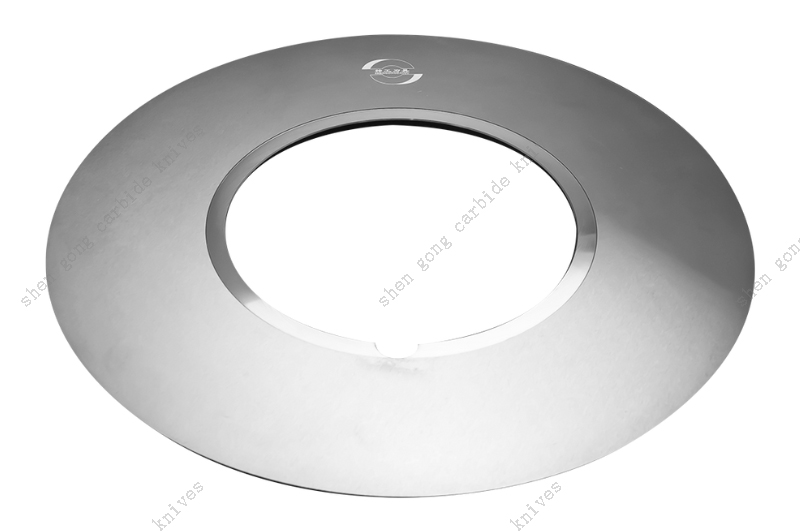
In the rapidly evolving landscape of industrial cutting tools, single edge blades continue to assert their significance across a multitude of applications. These blades, prized for their precision, durability, and versatility, are essential components in industries ranging from packaging and printing to food processing and medical device manufacturing. Recent developments in material science and production technology have further elevated the performance standards of these blades, positioning them as indispensable assets in modern manufacturing processes.
At the forefront of these advancements is a leading manufacturer known for its comprehensive production capabilities in cemented carbide and cermet materials. This company has established itself as a pioneer by offering a full spectrum of manufacturing processes, beginning with RTP powder formulation and extending through to the delivery of finished blades. Such integration ensures consistency in quality, enhanced material properties, and the ability to tailor products to specific industrial requirements.
**Material Innovation: Cemented Carbide and TiCN-based Cermet**
One of the company's core strengths lies in its mastery over tungsten carbide (WC)-based cemented carbides and titanium carbonitride (TiCN)-based cermet materials. Cemented carbides are renowned for their exceptional hardness and resistance to wear, making them ideal for blades that must maintain sharpness under demanding conditions. The incorporation of WC particles within a cobalt binder matrix provides a synergy of toughness and durability.
On the other hand, TiCN-based cermets introduce a unique combination of ceramic and metallic components, offering superior corrosion resistance and thermal stability. This is particularly advantageous in applications involving high-speed cutting or exposure to reactive substances. By utilizing these advanced materials, the company delivers blades that exhibit prolonged service life and consistent cutting performance.
**State-of-the-Art Production Lines: From Powder to Product**
The manufacturing process begins with RTP (Reaction-Thermal Powder) powder making — a crucial stage that defines the microstructure and, ultimately, the performance of the carbide and cermet materials. The company’s in-house powder production not only allows for stringent control over particle size and composition but also facilitates customization to meet client specifications.
Following powder production, the materials undergo pressing, sintering, and finishing operations. Precision pressing ensures uniform density, while optimized sintering cycles achieve the desired hardness and toughness. Integrated finishing processes, including grinding and edge honing, result in blades with razor-sharp edges and smooth surfaces that minimize friction during cutting.
By maintaining control over the entire production line, the company reduces dependency on external suppliers, shortens lead times, and ensures traceability throughout the manufacturing cycle. This vertical integration is a key factor in maintaining high standards of quality and reliability.
**Applications and Industry Impact**
Single edge blades produced with these advanced materials and manufacturing techniques find applications in numerous sectors. In the packaging industry, they offer clean, consistent cuts on a variety of materials such as paper, plastic films, and laminates. Their wear resistance reduces downtime caused by blade changes, thereby enhancing operational efficiency.
In the realm of medical devices, precision blades manufactured from TiCN-based cermet materials are utilized for surgical instruments requiring exacting standards of sharpness and biocompatibility. Similarly, printing industries benefit from blades that maintain edge integrity, ensuring smooth cutting of sheets and rolls without damaging substrates.
Furthermore, the food processing sector demands blades that can withstand rigorous sanitation processes while maintaining cutting precision. The corrosion resistance of TiCN-based cermet blades meets these stringent criteria, ensuring both safety and performance.
**Commitment to Quality and Innovation**
The company’s dedication to research and development continues to drive innovations in blade materials and design. By investing in cutting-edge technologies and collaborating with industry partners, it adapts to evolving market demands and regulatory standards. Continuous improvements in powder technology, sintering methods, and finishing processes translate into blades that set new benchmarks for performance and durability.
Furthermore, the firm’s comprehensive production capabilities support a flexible approach towards customization, allowing clients to request blades tailored to unique operational parameters. This customer-centric philosophy not only strengthens partnerships but also contributes to advancements in manufacturing workflows across industries.
**Conclusion**
The evolution of single edge blades, underpinned by breakthroughs in cemented carbide and cermet materials, reflects the dynamic interplay between material science and industrial application. Through its fully integrated production lines—from RTP powder making to finished products—the company exemplifies excellence in manufacturing precision cutting tools that meet stringent requirements.
As industries continue to demand higher efficiency and reliability from their cutting instruments, advancements spearheaded by leaders in carbide and cermet manufacturing will remain pivotal. The future of single edge blades is poised for continued innovation, driven by a blend of technical expertise, quality control, and a commitment to serving diverse industrial needs.