In today’s fast-evolving manufacturing landscape, the significance of high-performance sheet metal cutting tools cannot be overstated. These tools are fundamental to a wide array of sectors including automotive, aerospace, electronics, and construction, where precision, durability, and efficiency directly influence both productivity and product quality. Amid increasing demand for advanced materials and cutting technologies, companies specializing in industrial blades and knives are stepping up their innovation efforts, leveraging state-of-the-art materials and comprehensive production capabilities to deliver superior solutions.
One notable player in this field is a company distinguished by its complete production lines dedicated to manufacturing tungsten carbide (WC)-based cemented carbide and titanium carbonitride (TiCN)-based cermet materials. This company’s integrated approach spans the entire process chain—from rapid thermal processing (RTP) powder making to the crafting of finished products, enabling precise control over material properties and superior performance in the final cutting tools.
### The Importance of Material Innovation in Sheet Metal Cutting Tools
The performance of sheet metal cutting tools is closely tied to the materials used. Traditional high-speed steel tools have progressively given way to cemented carbide and cermet options due to their enhanced hardness, wear resistance, and heat tolerance. Cemented carbide, particularly those based on tungsten carbide (WC), exhibits exceptional toughness and the ability to retain cutting edges even under extreme conditions. TiCN-based cermet materials further enhance the wear resistance and smoothness of cutting, making them ideal for high-precision applications.
The company’s expertise in both WC-based cemented carbide and TiCN-based cermet materials places it at the forefront of supplying cutting-edge tools capable of meeting stringent industrial demands. By combining these materials’ properties, the company ensures tools that offer longer life cycles, reduced maintenance downtime, and improved cutting accuracy—key factors that translate into cost savings and higher quality production for end users.
### Integrated Production Lines: From Powder to Finished Blade
One of the distinguishing features of this company is its fully integrated production lines for advanced cutting materials and tools. Unlike many competitors that depend on external suppliers for raw or semi-finished materials, this company manages the entire manufacturing process internally. This vertical integration allows for tighter quality control, enhanced customization capabilities, and swifter adaptation to evolving client requirements.
The process begins with RTP powder making—a rapid thermal processing technique that optimizes powder characteristics such as particle size, purity, and homogeneity. These powders serve as the foundational building blocks for both cemented carbide and cermet blades.
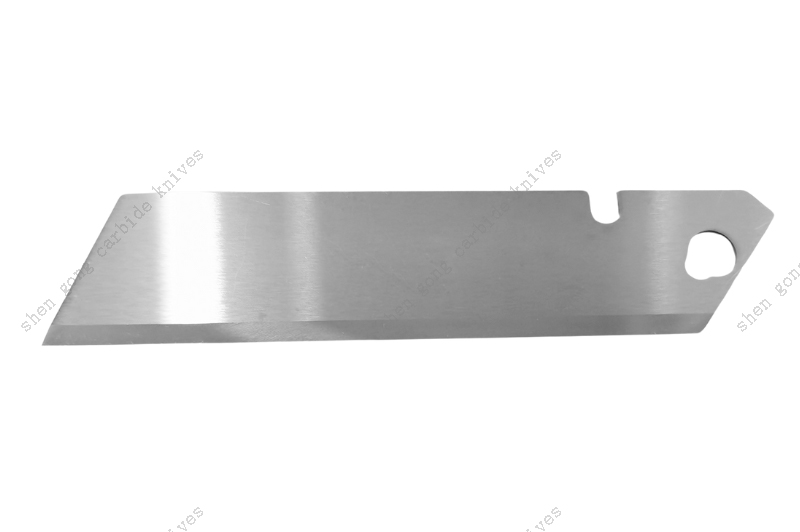
Following powder production, the company employs advanced pressing, sintering, and finishing processes to shape the materials into industrial knives and blades with exacting tolerances. The ability to govern every stage from raw material to final product ensures remarkable consistency and reliability across product lines.
### Applications Driving Demand for Advanced Cutting Tools
Industrial sectors dealing with sheet metals routinely encounter challenges related to tool wear, thermal stress, and cutting precision. Automotive manufacturers require robust cutting tools to handle diverse steel grades and alloys within tight tolerances to maintain part integrity and assembly fit. Aerospace enterprises demand lighter, stronger blades capable of precision cuts on difficult alloys. Electronics producers rely on ultra-fine edges for delicate components, while construction industries need resilient tools to manage heavy-gauge materials efficiently.
By offering a portfolio based on superior WC and TiCN materials, the company caters to these varied applications. The durability and wear resistance of their tools help extend operational periods between tool changes, and the razor-sharp edges enhance cutting quality, reduce scrap rates, and improve overall productivity.
### Continuous Innovation and Customization
The sheet metal cutting tool market is marked by rapid technological advances and evolving customer expectations. This company demonstrates a strong commitment to research and development, consistently enhancing material formulations and production techniques to push the limits of tool performance.
Moreover, the company provides customized solutions tailored to specific industrial needs. By working closely with clients, understanding their operational challenges, and leveraging flexible production capabilities, it develops tools optimized for niche applications, whether for high-speed stamping, fine blanking, or machining exotic alloys.
### Environmental and Economic Benefits
Advanced sheet metal cutting tools not only improve manufacturing efficiency but also contribute positively to environmental sustainability. Longer-lasting tools reduce waste associated with frequent replacements and lower the consumption of base materials. The company's integrated production process emphasizes resource efficiency, minimizing energy use and material loss throughout production stages.
Economically, these improvements lead to significant cost savings for manufacturers. Reduced tool downtime, higher yields, and optimized cutting speeds help companies maintain competitive advantage and respond rapidly to market demands.
### Outlook for the Sheet Metal Cutting Tool Industry
With the continual rise of automated and smart manufacturing practices, sheet metal cutting tools are expected to evolve further, incorporating sensor technologies and integration with digital control systems. Companies that excel in material science, production sophistication, and customer-centric service—such as the one described here—are well-positioned to lead this transformation.
As industries demand ever-greater precision, speed, and reliability, the role of high-quality cemented carbide and cermet cutting tools will become increasingly vital. By embracing innovation and comprehensive in-house manufacturing, the company is setting a benchmark for excellence and shaping the future of sheet metal cutting tools worldwide.
---
In conclusion, advancements in sheet metal cutting tools, underpinned by superior materials like WC-based cemented carbide and TiCN-based cermets, are redefining industrial manufacturing capabilities. With a holistic production approach that manages every stage from RTP powder making to finished blades, companies are delivering exceptional solutions that meet the complex needs of modern industries. This evolution not only enhances performance and cost-efficiency but also drives sustainable manufacturing practices—paving the way for the next generation of cutting-edge industrial tools.