
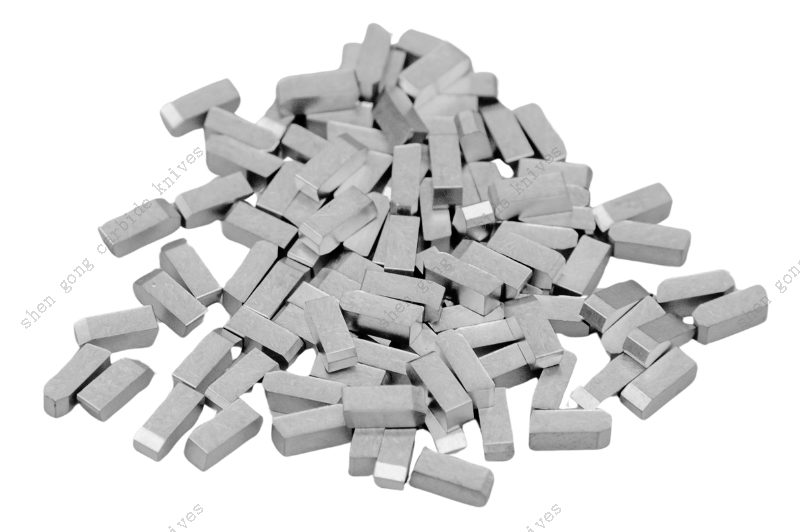
In the rapidly evolving landscape of industrial manufacturing, the significance of high-performance shredder blades cannot be overstated. These critical components underpin a range of operations — from waste management and recycling to heavy-duty materials processing. With advances in materials science and manufacturing techniques, modern industrial shredder blades are engineered to deliver enhanced durability, precision, and cutting efficiency, driving productivity and reducing operational costs for businesses worldwide.
**Advanced Materials for Superior Performance**
At the forefront of this innovation is the utilization of WC-based cemented carbide and TiCN-based cermet materials. These advanced composites allow the production of shredder blades that withstand extreme wear and tear, maintain sharp cutting edges over prolonged use, and operate efficiently under the high-stress conditions typical of industrial applications.
WC-based (tungsten carbide) cemented carbides are renowned for their exceptional hardness and abrasion resistance, often employed in cutting tools that require longevity and toughness. Complementing this, TiCN-based (titanium carbonitride) cermets provide a unique combination of hardness, toughness, and oxidation resistance, making them ideal for blades that encounter abrasive or corrosive environments.
**Complete Production Capabilities Empowering Quality**
The manufacturing process behind these sophisticated blades is equally critical to their superior performance. Companies specializing in this sector now offer complete production lines dedicated to handling these advanced materials, covering the entire process from raw powder synthesis to final product completion.
Starting with RTP (Recycled Tungsten Powder) powder making, these production facilities ensure material consistency and purity, which directly influence the mechanical properties and wear resistance of the finished blade. By tightly controlling powder quality and composition, manufacturers achieve enhanced toughness and edge retention in the final cutting tools.
Following powder preparation, the manufacturing process advances through stages of pressing, sintering, and precision machining, all calibrated to achieve the optimal microstructure and geometry of the blades. Quality control measures at each step guarantee that the blades meet exacting industrial standards, ensuring reliability in demanding operating conditions.
**Industrial Shredder Blades: Driving Efficiency in Diverse Sectors**
The impact of these high-quality shredder blades is evident across various industries:
- **Waste Management and Recycling:** Efficient shredding of plastics, metals, paper, and organic waste relies heavily on blades that maintain edge sharpness despite harsh materials and abrasion. Durable carbide and cermet blades facilitate the processing of large volumes with minimal downtime for blade maintenance or replacement.
- **Manufacturing and Heavy Machinery:** From shredding scrap metal to breaking down raw materials, industrial shredder blades contribute to streamlined manufacturing workflows. Their toughness reduces the risk of unexpected failures, minimizing costly halts in production lines.
- **Automotive and Electronics Recycling:** These sectors demand precise cutting tools capable of handling complex assemblies and mixed materials. The specialized blades deliver the cutting precision and durability necessary to maximize material recovery rates.
- **Agricultural Processing:** Shredder blades assist in processing biomass and agricultural waste, where corrosion resistance and toughness extend blade service life in challenging environmental conditions.
**Commitment to Innovation and Sustainability**
The development of industrial shredder blades using WC-based cemented carbide and TiCN-based cermet materials aligns with broader sustainability goals. By enhancing the lifespan and efficiency of blades, manufacturers reduce material consumption and waste generation associated with frequent blade replacements. Furthermore, refined processing techniques, such as RTP powder making, allow for recycling and reuse of tungsten materials, minimizing environmental impact and dependency on raw resource extraction.
This holistic manufacturing approach reflects an industry commitment to integrating cutting-edge material science with environmentally responsible practices. The result is a new generation of industrial tooling capable of meeting the demands of modern production while supporting circular economy initiatives.
**Looking Ahead**
As industries continue to evolve with increasing automation and stringent performance requirements, the importance of reliable, efficient industrial shredder blades will only grow. The synergy between advanced WC-based and TiCN-based materials combined with comprehensive production capabilities positions suppliers to meet these challenges head-on.
By investing in research, development, and quality-controlled manufacturing, these companies ensure that businesses across sectors have access to superior cutting tools that drive productivity, reduce operational costs, and support sustainable industrial practices.
**About the Manufacturer**
Boasting comprehensive production lines dedicated to WC-based cemented carbide and TiCN-based cermet material manufacturing, the company covers the entire spectrum from RTP powder making to finalized industrial knives and blades. This vertical integration not only enhances quality control throughout the manufacturing process but also allows for rapid innovation and responsiveness to market demands.
Through continued commitment to material excellence and process optimization, they have established themselves as a trusted partner in providing cutting-edge blade solutions that meet the stringent requirements of modern industry.
---
**In summary**, the modern industrial shredder blade market is witnessing transformative advances through the adoption of WC-based cemented carbide and TiCN-based cermet materials. Leveraging complete production lines from RTP powder making to finished products enables the delivery of blades that combine durability, precision, and sustainability—ultimately empowering industries to operate more efficiently in an increasingly complex global economy.