
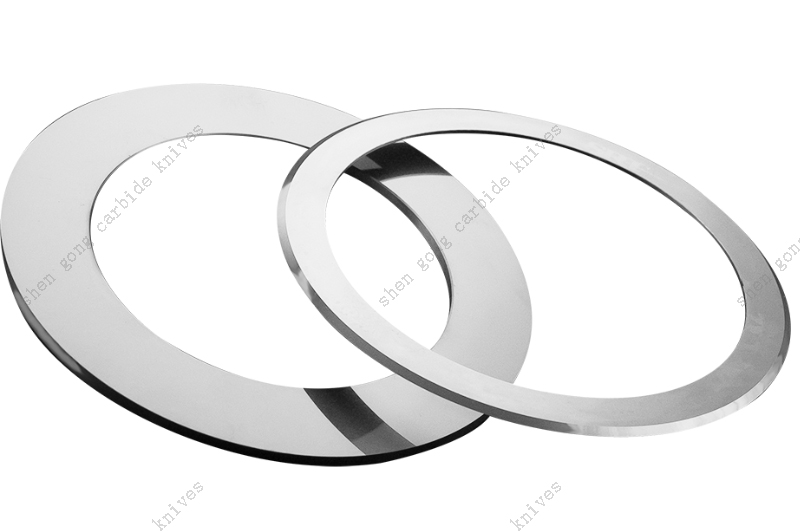
In today’s fast-paced manufacturing environment, precision and durability in cutting tools are more critical than ever. Rotary slitting blades play a pivotal role across various industries, providing clean, accurate cuts essential for product quality and operational efficiency. By integrating advanced material technology and comprehensive production processes, companies are now delivering rotary slitting blades that significantly enhance performance and longevity.
**Comprehensive Manufacturing Expertise**
A leading name in the production of industrial knives and blades, Shen Gong, exemplifies innovation and quality in this specialized market. The company boasts complete production lines dedicated to WC-based cemented carbide and TiCN-based cermet materials—two of the most advanced materials used in cutting tools. Covering the entire manufacturing cycle—from RTP (Reactive Thermal Powder) powder production to the final finishing of the blade—Shen Gong ensures stringent quality control and precision at every stage.
This thorough approach allows Shen Gong to expertly tailor the properties of rotary slitting blades to meet diverse industrial requirements, whether for paper, film, foil, textiles, or metal slitting processes. The utilization of WC-based cemented carbide provides the blades with exceptional hardness and wear resistance, making them ideal for high-speed cutting applications. Meanwhile, TiCN-based cermet materials offer enhanced toughness and resistance to deformation, extending the blade life under demanding cutting conditions.
**Advanced Materials Driving Performance**
The choice of material profoundly affects the operational effectiveness of rotary slitting blades. WC-based cemented carbide, known for its superior hardness, offers excellent abrasion resistance and retains sharpness even under extreme working conditions. This makes it the go-to material for blades that must deliver consistent, precise cuts over extended periods.
TiCN-based cermet materials, characterized by a composite structure combining ceramic and metallic elements, bring an optimal balance between hardness and toughness. These blades handle impacts and vibrations better than many traditional alternatives, reducing the risk of chipping or cracking. Their resistance to oxidation and chemical wear also makes them suitable for cutting polymers and composite materials, where exposure to heat and friction can degrade blade integrity.
By adopting these materials and expertly controlling powder synthesis via RTP technology, Shen Gong achieves a uniform microstructure in the blades, which translates into enhanced cutting performance and reliability. The company’s in-house RTP powder manufacturing guarantees purity and consistency, critical factors in blade quality.
**Meticulous Process Control from Powder to Product**
Shen Gong’s production methodology spans the entire value chain, beginning with RTP powder production. This method combines chemical reaction and thermal processing to produce high-purity, homogenous powders tailored for either WC-based cemented carbide or TiCN-based cermet blades. The company’s control over this early stage ensures the raw materials have the desired particle size and composition, fundamental for the mechanical properties of the finished blade.
Following powder synthesis, the materials undergo pressing, sintering, and heat treatment processes optimized for each application. Precision grinding and finishing techniques then shape the blades to exact specifications, creating sharp cutting edges that require minimal maintenance and replacement. This fully integrated manufacturing approach reduces lead time, maintains exceptional repeatability, and allows swift adaptation to custom orders or new industrial requirements.
**Applications Transforming Industry Efficiency**
Rotary slitting blades produced through these innovative processes find applications across a broad spectrum of industries. In the packaging sector, they are crucial for cutting films, foils, and laminates used in consumer goods packaging, where precise slitting minimizes material waste and improves product aesthetics. In the paper industry, these blades enhance the quality of fine printing and reduce downtime by lasting longer despite high-speed operations.
The textile and nonwoven industries also benefit significantly from the durability and sharpness of these blades, where clean cuts prevent fraying and maintain fabric integrity. Additionally, metals processing applications require blades that withstand abrasive conditions—another area where WC-based cemented carbide and TiCN-based cermet blades excel.
By delivering superior cutting tools, companies like Shen Gong enable manufacturers to increase throughput, reduce operational costs, and maintain stringent quality standards.
**Looking Ahead: Innovation and Sustainability**
As market demands evolve, so do expectations for cutting tools. Beyond performance, there is growing emphasis on sustainability and cost-effectiveness. The incorporation of advanced materials combined with highly efficient production processes positions companies like Shen Gong at the forefront of delivering blades that not only perform better but also extend service life, reducing frequent replacements and waste.
Furthermore, ongoing research into novel material composites and surface coatings promises to further elevate the capabilities of rotary slitting blades. The integration of smart manufacturing technologies and precision metrology within the production lines is expected to enhance quality assurance and customization options going forward.
**Conclusion**
Rotary slitting blades represent a critical component in modern manufacturing processes, and advancements in materials and production methods are unlocking new levels of performance and durability. With comprehensive expertise in WC-based cemented carbide and TiCN-based cermet materials, supported by meticulous process control from RTP powder production to finished products, Shen Gong exemplifies the cutting-edge of industrial blade manufacturing.
Through continuous innovation, these blades not only meet the rigorous demands of various industries but also contribute to operational efficiency, product quality, and sustainability goals. As manufacturers seek to enhance competitiveness, reliance on such high-performance cutting tools will only increase, underscoring the strategic importance of material science and integrated production capabilities in this sector.